

If you’ve ever wanted a dessert that looks like it came straight out of a Parisian patisserie but secretly takes almost no effort to make, this Raspberry Rose Panna Cotta Recipe is exactly what you’ve been searching for. It’s creamy, wobbly, floral, and fruit-forward all at once — a dessert that makes people genuinely pause before they take their first bite.
Panna cotta is one of those rare recipes where elegance and simplicity meet in perfect harmony. The name literally means “cooked cream” in Italian, and that’s the beauty of it — you’re essentially making a lightly sweetened, gelatin-set cream and letting the flavors do all the talking. When you layer in the heady romance of rose water and the bright tartness of fresh raspberries, the result is something that feels truly extraordinary.
Whether you’re planning a dinner party, a date night at home, or just treating yourself on a slow Sunday afternoon, this recipe delivers. It can be made a full day ahead, requires zero baking, and looks absolutely stunning on the plate. Let’s get into it.
What Makes This Raspberry Rose Panna Cotta So Special
Most panna cotta recipes are vanilla or plain — delicious, yes, but predictable. This version takes things up a notch with two layers of flavor that complement each other beautifully. Rose water adds a soft, perfumed floral note that doesn’t overwhelm — think of it as a whisper rather than a shout. The raspberry coulis brings acidity and color, cutting right through the richness of the cream.
The texture is where this recipe really shines. It’s not rubbery or dense. When done right, panna cotta has an almost breathtaking wobble to it — barely set, silky smooth, and luxurious in a way that no other dessert quite replicates. The secret is in the gelatin ratio, and we’ll walk you through it precisely so you never end up with a bouncy, over-set mess.
If you enjoy elegant, make-ahead desserts like this, you might also love our pistachio ice cream — another no-fuss recipe that’s rich, creamy, and utterly impressive.
Ingredients for Raspberry Rose Panna Cotta
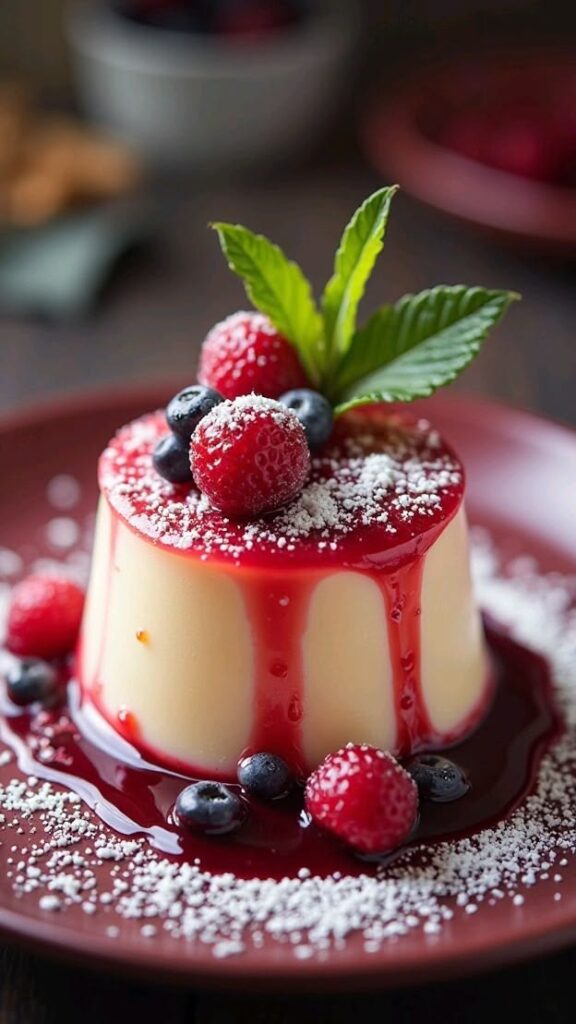
Here’s everything you need, broken down into two components: the panna cotta base and the raspberry rose coulis.
For the Panna Cotta Base
- 2 cups (480ml) heavy cream (or double cream)
- ½ cup (120ml) whole milk
- 3 tablespoons (36g) white granulated sugar
- 1½ teaspoons unflavored powdered gelatin
- 2 tablespoons cold water (for blooming the gelatin)
- 1½ teaspoons rose water (adjust to taste)
- ½ teaspoon pure vanilla extract
- Pinch of fine sea salt
For the Raspberry Rose Coulis
- 1½ cups (180g) fresh or frozen raspberries
- 2 tablespoons granulated sugar
- 1 tablespoon lemon juice
- ½ teaspoon rose water
For Garnish
- Fresh raspberries
- Dried edible rose petals
- A light dusting of powdered sugar (optional)
Yield: 4 servings | Prep Time: 15 minutes | Chill Time: 4–6 hours (or overnight) | Total Active Time: 25 minutes
Step-by-Step Instructions
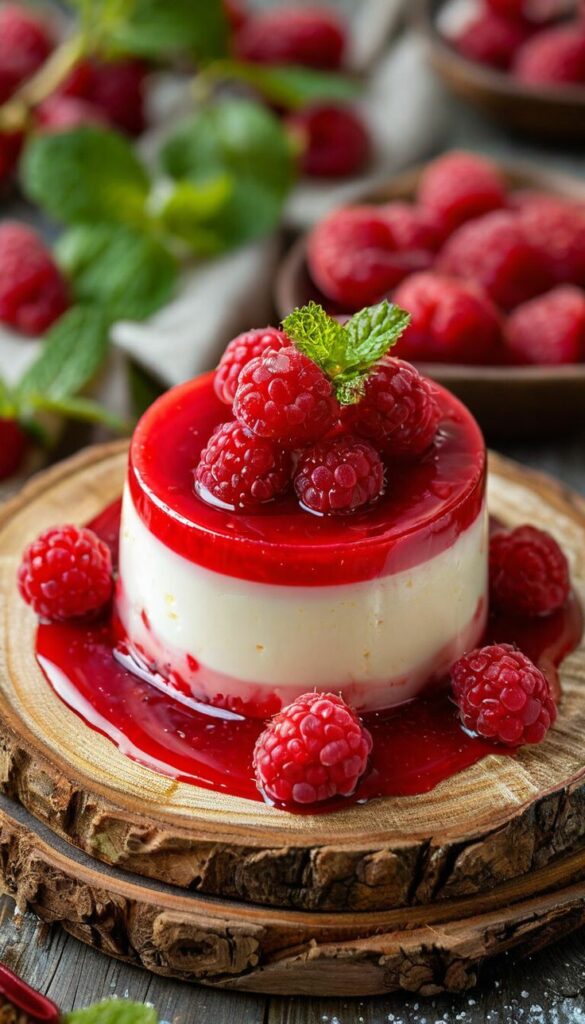
Step 1: Bloom the Gelatin
Pour 2 tablespoons of cold water into a small bowl and sprinkle the gelatin powder evenly over the surface. Let it sit for 5 minutes without stirring. During this time, the gelatin granules will absorb the water and swell — this is called “blooming,” and it’s a critical step that ensures your gelatin dissolves evenly without clumping. Don’t rush it and don’t skip it.
Step 2: Warm the Cream Mixture
Combine the heavy cream, whole milk, and sugar in a medium saucepan over medium-low heat. Stir gently and heat until the sugar dissolves and the mixture just begins to steam — you want it hot but not boiling. Tiny bubbles around the edges are your cue. This usually takes 4–5 minutes.
Step 3: Dissolve the Gelatin
Remove the saucepan from the heat and add the bloomed gelatin to the warm cream. Whisk gently but thoroughly until the gelatin is completely dissolved — no streaks, no lumps. This should only take about 30–60 seconds. Then stir in the rose water, vanilla extract, and sea salt. Taste the mixture at this point; the rose water flavor should be fragrant but subtle.
Step 4: Pour and Chill
Divide the panna cotta mixture evenly among 4 serving glasses, ramekins, or silicone molds. If you’re using ramekins and plan to unmold them onto plates, lightly grease the inside with a tasteless oil (like grapeseed) before pouring. Let the mixture cool to room temperature for about 20 minutes, then cover and refrigerate for at least 4–6 hours, or ideally overnight.
Step 5: Make the Raspberry Rose Coulis
Combine raspberries, sugar, and lemon juice in a small saucepan over medium heat. Cook, stirring occasionally, until the raspberries break down completely and the mixture thickens slightly — about 6–8 minutes. Remove from heat, stir in the rose water, and press the mixture through a fine-mesh sieve to remove the seeds. Let the coulis cool to room temperature, then refrigerate until needed.
Step 6: Serve
To serve in glasses: Simply spoon the raspberry rose coulis over the chilled panna cotta and garnish with fresh raspberries and rose petals. To unmold: Run a thin knife around the edge of the ramekin, place a plate face-down on top, and flip with a confident, swift motion. The panna cotta should release cleanly. Spoon coulis around and over it.
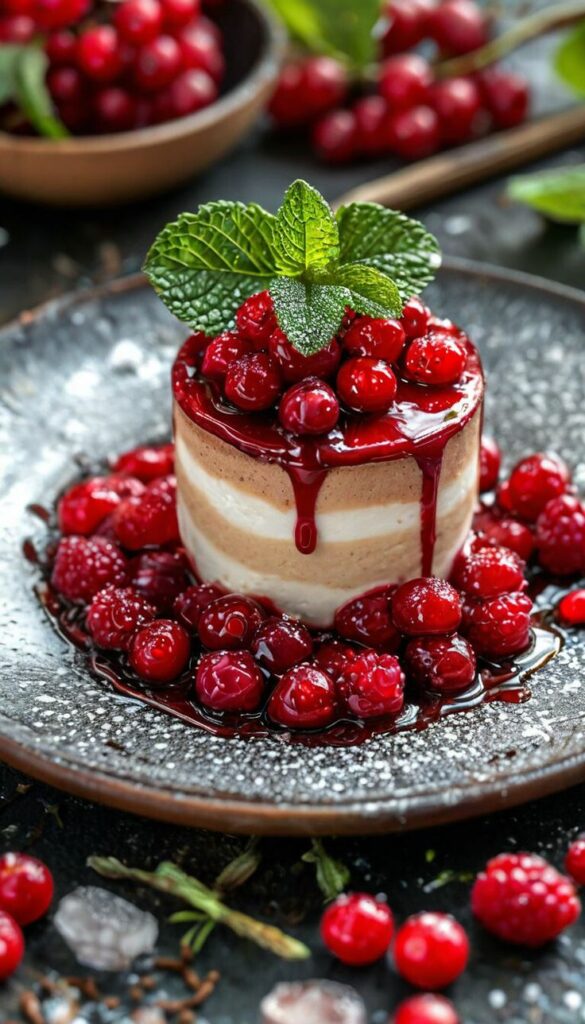
Pro Tips for the Perfect Panna Cotta Texture
The texture is what separates a great panna cotta from a forgettable one. Here’s how to nail it every single time.
Use the right gelatin ratio. This recipe uses 1½ teaspoons for 2½ cups of liquid, which produces a barely-set, silky result. If you’re using gelatin sheets instead of powder, use 2 sheets (2g each). Too much gelatin and you’ll end up with something closer to Jell-O. Too little and it won’t hold its shape.
Don’t boil the cream. Overheating dairy can affect the flavor and the fat structure, which impacts creaminess. Keep the heat at medium-low and pull it off before it reaches a full boil.
Bloom your gelatin in cold water, always. Adding gelatin directly to hot liquid without blooming it first causes clumping. The bloom step is non-negotiable.
Let it set slowly. A minimum of 4 hours is required, but overnight is best. The panna cotta continues to firm up and the flavors deepen as it chills. If you’re making this for guests, prepare it the evening before — it’ll be perfect by dinner.
Taste your rose water before using it. Rose water varies significantly in intensity by brand. Start with 1 teaspoon, taste the mixture, and add more if needed. You want floral, not soapy.
Variations & Substitutions
One of the best things about this Raspberry Rose Panna Cotta Recipe is how easily you can adapt it to different tastes, dietary needs, or seasonal ingredients.
Dairy-free version: Replace the heavy cream and whole milk with full-fat canned coconut milk. The flavor is slightly tropical but works beautifully with the rose and raspberry. Use agar-agar instead of gelatin (about 1 teaspoon for the same quantity) to keep it fully vegan.
Different fruit coulis: Strawberry, blackberry, or mango all work wonderfully in place of raspberries. A blood orange coulis in winter would be stunning both visually and in flavor.
Lavender instead of rose: If rose water isn’t your thing, a small amount of culinary lavender steeped in the warm cream (then strained out) produces a similar floral effect. Use about 1 teaspoon of dried lavender buds.
Honey instead of sugar: Swap the granulated sugar for 2 tablespoons of good-quality honey for a more complex, slightly amber sweetness that pairs particularly well with the floral notes.
Individual cups vs. unmolded: If the idea of unmolding stresses you out, simply serve the panna cotta in elegant coupes, wine glasses, or small glass jars topped with coulis. They look just as beautiful and require zero stress.
Serving Suggestions
This dessert is naturally elegant, but how you serve it can take it from lovely to truly memorable. If you’re putting together a special dinner, this panna cotta makes a gorgeous finale. Pair it with a glass of chilled Moscato d’Asti or a dry rosé — both echo the floral notes in the dessert without competing with them.
For a dinner party, serve it unmolded on flat, wide-rimmed plates to show off the shape, with the coulis drizzled in a spiral. A sprig of fresh mint or a few micro herbs add color contrast and freshness. For a more casual setting, glass vessels or small mason jars are perfect — they look charming on a tray and require zero last-minute plating stress.
This also makes a stunning dessert for a romantic dinner at home. If you’re building a full menu, check out our favorite dinner recipes for couples — easy, impressive meals that set the perfect stage for a dessert this special.
Storage Tips
In the refrigerator: Covered tightly with plastic wrap or a lid, panna cotta will keep well for up to 3 days. The coulis can be stored separately in an airtight container in the fridge for up to 5 days. Store them separately and add the coulis just before serving for the best presentation.
Can you freeze panna cotta? Technically yes, but it’s not recommended. Freezing changes the texture of the gelatin, and when thawed, the panna cotta can become grainy or weep liquid. It’s best enjoyed fresh from the fridge.
Make-ahead tip: This is an ideal make-ahead dessert. Prepare both the panna cotta and the coulis the day before your event. Keep the coulis in a small jar in the fridge and give it a quick stir before serving. When guests arrive, all the work is already done.
Frequently Asked Questions
Can I use gelatin sheets instead of powder?
Yes. Replace 1½ teaspoons of powdered gelatin with 2 standard gelatin sheets (about 2g each). Soak them in cold water for 5 minutes, squeeze out excess water, and add to the warm cream as you would the bloomed powder.
My panna cotta didn’t set — what went wrong?
The most common culprits are under-bloomed gelatin, liquid that was too hot when the gelatin was added (which can destroy its setting ability), or not enough chill time. Make sure the cream is steaming but not boiling before you add the gelatin, and give it a full 6 hours to set.
How strong is the rose flavor?
As written, the rose flavor is delicate and romantic — more of a fragrant backdrop than the star of the show. If you love a more pronounced floral flavor, increase the rose water to 2 teaspoons total (1 in the base, 1 in the coulis). Always add gradually and taste as you go.
Can I make this in a large mold instead of individual portions?
Absolutely. Pour into a small loaf pan or round cake pan lined with plastic wrap. Allow it to set fully (overnight is safest for larger quantities), then invert onto a platter and slice to serve. It makes a dramatic centerpiece dessert.
Why You’ll Make This Again and Again
Here’s the thing about this Raspberry Rose Panna Cotta Recipe — it’s the kind of dish that quietly becomes part of your repertoire. It requires no special equipment, no baking skills, no precision timing on the night of your dinner. You make it the night before, forget about it, and then at dessert time you simply plate and pour. It’s essentially a gift to your future self.
The flavor is complex enough to feel sophisticated but familiar enough that everyone loves it. The combination of cream, berries, and flowers is timeless and a little bit romantic. It photographs beautifully, impresses guests reliably, and — perhaps most importantly — it tastes absolutely magnificent.
Whether you’re a seasoned home cook or just starting to branch out from baked goods, this is a recipe worth mastering. Once you get the gelatin ratio right and find your preferred level of rose water, you’ll find yourself making variations of this for every season, every occasion, and every mood.
Make it once. You’ll understand.
Tried this Raspberry Rose Panna Cotta Recipe? Leave a comment below with your results, or tag us on social media — we’d love to see your beautiful creations!


